


Mapping the Lifecycle of a Modern Courier Delivery Process
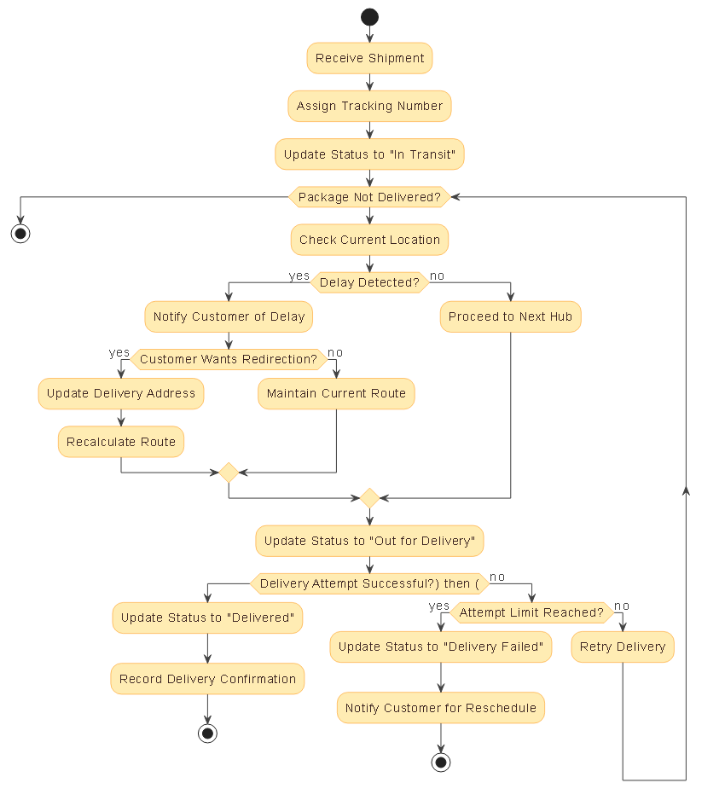
Visualizing complex logistics workflows has never been easier—especially with the rise of AI-powered tools that turn natural language into professional diagrams. This AI Activity Diagram generator demonstrates how a package moves from shipment to delivery in a real-world courier service, using a dynamic, condition-driven flow that mirrors actual operational logic.
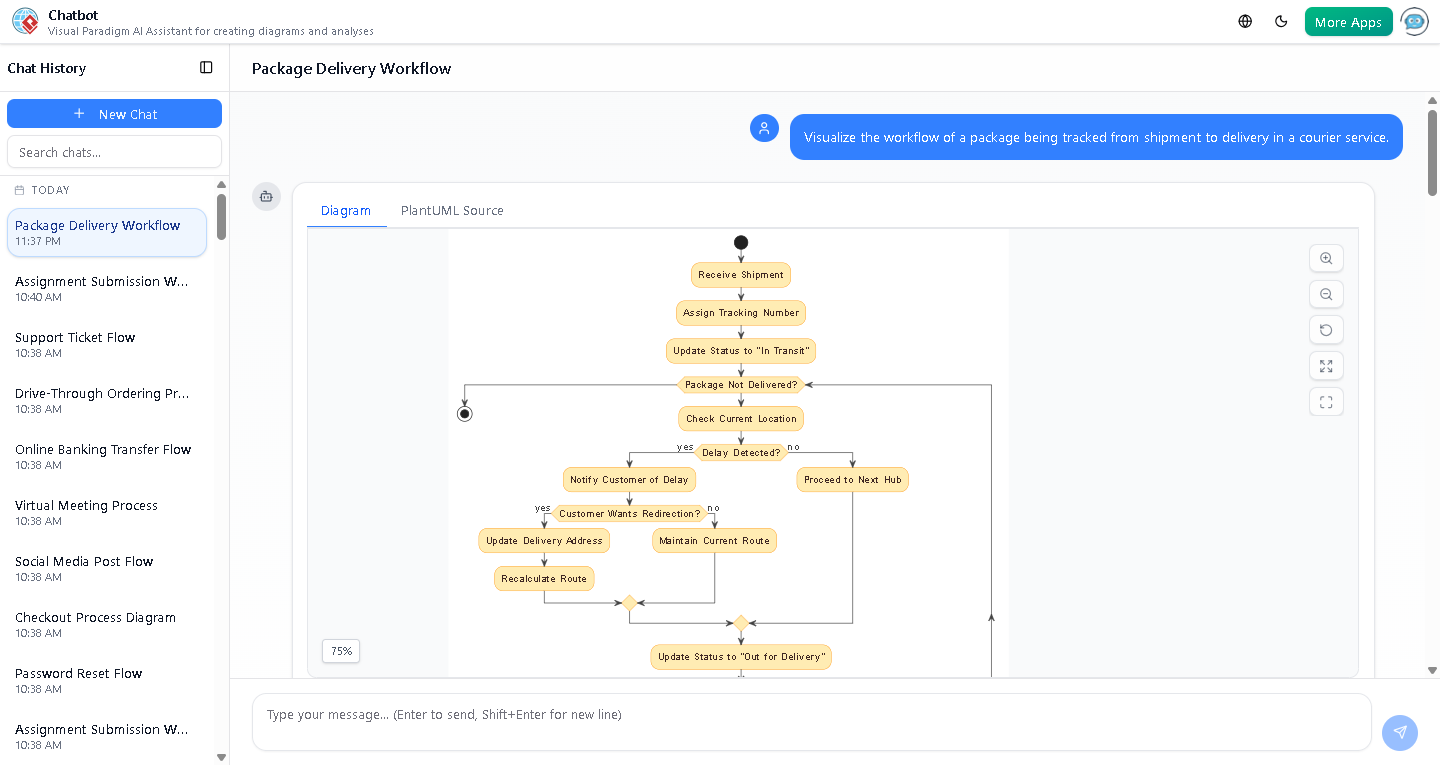
Powered by the Visual Paradigm AI Chatbot, this diagram was created through a simple conversation: “Visualize the workflow of a package being tracked from shipment to delivery in a courier service.” Within seconds, the system transformed this request into a fully structured PlantUML diagram, complete with decision nodes, status transitions, and error-handling pathways.
Core Elements of the Delivery Tracking Workflow
The diagram captures the full journey of a package, starting with receipt and ending with successful delivery or failure. It emphasizes real-time tracking, customer interaction, and adaptive routing—key components in today’s demand-driven logistics environment.
- Initial Onboarding: The process begins with the physical receipt of the package, followed by a unique tracking number assignment and status update to “In Transit”.
- Dynamic Monitoring: A continuous loop checks the package’s location and evaluates whether delays have occurred.
- Customer-Centric Responses: If a delay is detected, the system notifies the customer and offers the option to redirect the delivery, ensuring flexibility and transparency.
- Fault Tolerance: Failed delivery attempts trigger retries, with a hard limit to prevent infinite loops. If all attempts fail, the system flags the delivery as failed and prompts rescheduling.
How the AI Enhanced the Diagram
During the conversation, the user asked for an explanation of the diagram. The AI Chatbot responded with a detailed breakdown, clarifying each node and decision path. It also highlighted the diagram’s ability to support real-time status updates, audit trails, and customer engagement—features essential for modern logistics platforms.
What makes this interaction exceptional is the platform’s ability to not just generate visuals, but to explain, refine, and expand** the model through natural conversation. Users can ask for modifications—such as adding swimlanes, translating to another standard (e.g., C4 or SysML), or exporting to PDF or PowerPoint—without leaving the interface.
Why This Matters for Logistics Systems
For courier services, delivery tracking isn’t just about status updates—it’s about reliability, customer trust, and operational efficiency. This diagram illustrates how intelligent workflows can:
- Reduce delivery delays through proactive alerts.
- Improve customer satisfaction by enabling real-time choices.
- Support data-driven decision-making with traceable events.
- Scale across multiple delivery networks with consistent logic.
Next Step: Build Your Own Intelligent Workflow
Whether you’re designing a shipping platform, optimizing delivery routes, or building a customer-facing tracking dashboard, this AI-generated model provides a solid foundation. The Visual Paradigm AI Chatbot makes it easy to prototype, iterate, and deploy such systems—no coding required.
Ready to transform your logistics design process? Try the AI Chatbot today and start building your next-generation delivery tracking system with confidence.