


Modeling the Library Book Lifecycle with Intelligent Workflow Logic
Modern library systems demand precise, scalable process modeling—and the AI Activity Diagram generator within Visual Paradigm delivers exactly that. By transforming natural language prompts into fully structured, professional diagrams, the platform empowers users to design complex workflows without deep technical expertise. In this example, we explore the book borrowing and return process, a foundational workflow in any library environment, crafted using the Visual Paradigm AI Chatbot.
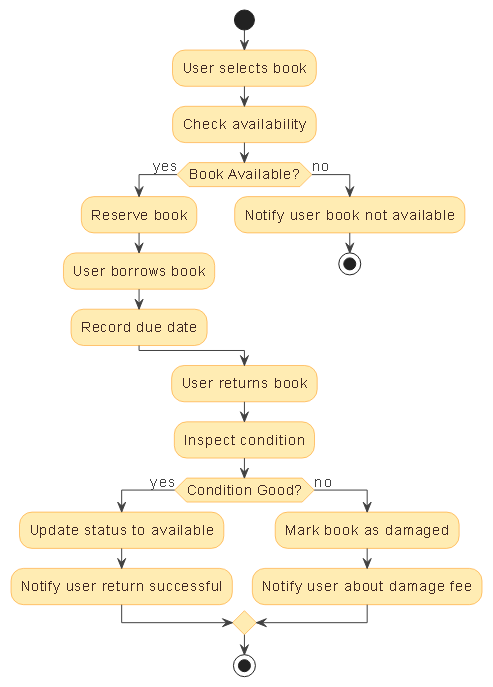
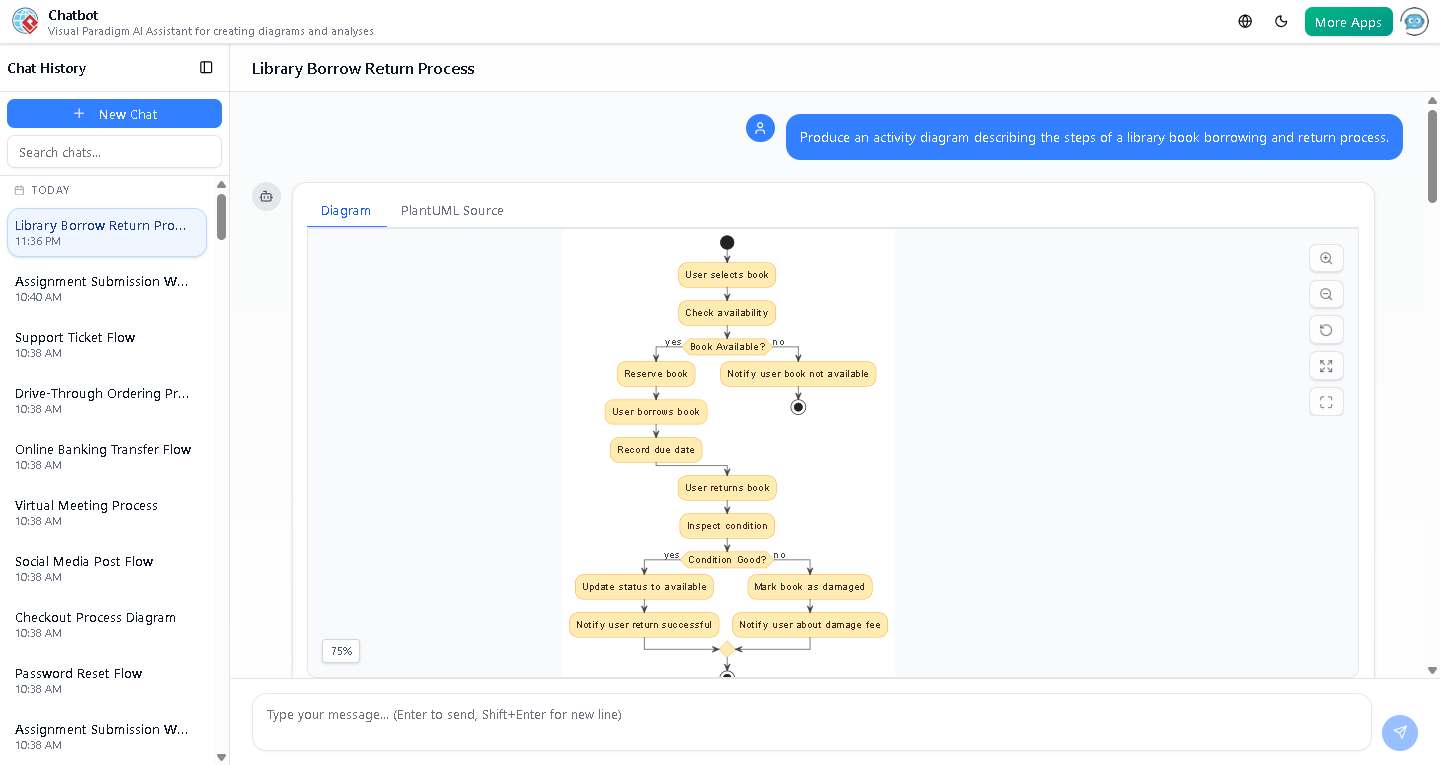
With the initial prompt—”Produce an activity diagram describing the steps of a library book borrowing and return process”—the AI instantly generated a clear, interactive diagram that captures every decision point, user action, and system response. This isn’t just a static image; it’s a living model that can be refined, expanded, or translated through conversation.
From Conversation to Clarity: How the AI Transformed a Simple Request
When the user asked for a diagram, the AI didn’t just generate a visual—it built a logical narrative. The resulting activity diagram maps the full lifecycle of a book, from selection to return, with built-in decision logic and user feedback mechanisms.
Key highlights from the interaction:
- Real-time decision modeling: The diagram uses conditional flows to represent availability checks and condition inspections.
- User-centric outcomes: Notifications for unavailability and damage fees ensure transparency and accountability.
- Extensible structure: The model is designed to accommodate future enhancements—such as overdue alerts, fines, or digital borrowing workflows.
After generating the initial diagram, the user requested an explanation. The AI responded with a detailed breakdown, clarifying each step, decision node, and system behavior. This demonstrates how the Visual Paradigm AI Chatbot functions not just as a diagramming tool, but as a collaborative design partner—providing insight, context, and actionable suggestions.
Why This Diagram Works: Design Principles in Action
The diagram’s strength lies in its balance of simplicity and depth. It follows standard UML activity diagram conventions while embedding real-world logic:
- Start and end points clearly define the process boundaries.
- Swimlanes (implied through visual hierarchy) separate user actions from system responses.
- Conditional branching models the critical decisions: Is the book available? Is it in good condition?
- Outcome-based flows ensure every path leads to a clear result—success, notification, or penalty.
These elements make the diagram ideal for use in library management system design, staff training, or software specification documents.
Beyond Diagrams: AI-Powered Modeling as a Strategic Advantage
Visual Paradigm, the comprehensive AI-powered visual modeling platform, goes far beyond generating static visuals. The AI Chatbot supports multiple standards—including UML, ArchiMate, SysML, C4, and mind maps—making it adaptable to diverse use cases. Whether you’re modeling a library workflow, a banking transaction, or a cloud architecture, the platform ensures consistency and clarity.
With features like AI Touch-ups, you can refine diagrams by simply typing requests like “Add a delay for overdue notifications” or “Translate this into a C4 model.” The AI understands context and adjusts the model accordingly, saving time and reducing errors.
Additionally, the platform doesn’t stop at visuals. It generates explanations, suggests follow-up actions, and even drafts documentation—making it a complete solution for system design, analysis, and communication.
Try It Yourself: Start Your Next Diagram in Seconds
Whether you’re a librarian, software designer, or business analyst, the ability to turn a simple idea into a professional diagram through natural conversation is a game-changer. The AI Activity Diagram generator within Visual Paradigm makes it effortless to model complex processes with precision and clarity.